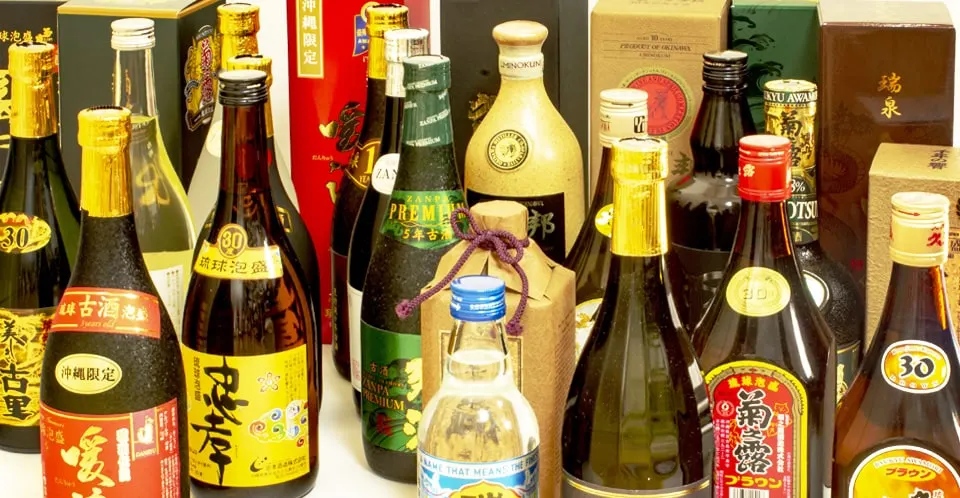
Reading the shelf
Awamori is Okinawa’s rice-based distilled spirit, made using black koji. A shelf full of Japanese names, ages and strengths can be difficult to navigate even when you already know the word awamori.
| Label | Meaning |
|---|---|
| 泡盛 | Awamori |
| 古酒 | Kusu: aged awamori |
| 30度 / 43度 | 30% / 43% alcohol by volume |
| 5年古酒 / 10年古酒 | Five-year / ten-year aged awamori |
| 甕仕込 | Kamejikomi: made using earthenware fermentation vessels |
The bottles in this article are ones I picked from the many awamori I have actually drunk. A brand can sell several ages and strengths, so use the full Japanese name when finding it on a shelf. Photographs show the bottles I had; packaging may have changed.
Yumekokai — 夢航海

Chuko Distillery / 忠孝酒造 · 30%
One of the lighter, cleaner awamori I have drunk. It is sometimes described as green apple, but to me it is more a faint fruity aroma than anything like a sweet fruit liqueur. I think it works especially well with soda.
There is a local joke about regretting a night of Yumekokai: kokai, “voyage,” sounds the same as the word for regret. To me, the joke is about how easily it goes down, rather than a special property of the drink.
Tatsu Gold — 龍ゴールド

Kin Distillery / 金武酒造 · 25%
More than once, while drinking with local friends, I have seen everyone agree on some version of “Tatsu is good too.” It is not a bottle I associate with flashy coverage. It has a comfortable balance of body, sweetness and a clean finish, without an especially forceful character.
The large 龍 character, meaning dragon, makes the label memorable. This remains an easy bottle for me to suggest for everyday drinking.
Danryu SHIP — 暖流SHIP
Kamimura Distillery / 神村酒造 · 30%
Danryu connects awamori with the oak character familiar from whisky. I find the barrel notes especially apparent with soda, while the underlying koji character is still present.
Kamimura’s current SHIP description identifies a blend using oak-aged awamori. SHIP and the stronger CRAFT are different products. My earlier photographs do not show the current SHIP bottle, so use 暖流SHIP on the label to identify it.
Gyokuyu Kamejikomi 5-Year — 玉友 甕仕込5年古酒

Ishikawa Distillery / 石川酒造場 · 30%
This is the bottle I often reach for when someone wants something that still tastes distinctly like awamori without the character becoming too forceful. A little grain character remains, but the aroma is restrained, with sweetness and a clean finish.
I have drunk it many times over the years and my impression has stayed remarkably consistent. Look for 甕仕込, 5年古酒 and 30度. The distillery also lists 25% and 43% versions, so the strength matters.
Zanpa Premium — 残波プレミアム

Higa Distillery / 比嘉酒造
Zanpa is one of Okinawa’s familiar names. In the Premium I tasted, the soft fruit impression leaned more toward grape or pear than green apple or citrus, with enough aged depth to give it body.
The brand has several Premium strengths and ages. Compare the exact label rather than assuming every Premium bottle matches these notes. You may also hear the separate White and Black lines called Zanshiro and Zankuro locally.
Kikunotsuyu 7-Year — 菊之露7年古酒

Kikunotsuyu Distillery / 菊之露酒造 · 38%
The familiar grain-like sweetness of Kikunotsuyu seemed to turn into a delicate chocolate-like aroma in this seven-year bottle. The 38% strength felt neither thin nor excessively heavy to me.
It is a bottle I think of when I want rounded aged character. 菊之露 alone is not enough to identify it: look for 7年古酒 too.
Ryukyu Premium — 琉球プレミアム

Shinzato Distillery / 新里酒造 · 35%
Sweetness and bitterness, grain and fruit, rounded body and a clean finish seem to meet near the middle. It feels like a useful reference point for aged awamori rather than an extreme style.
The 琉球 name and presentation also make it easy to explain as a gift from Okinawa.
Zuisen Omoro 10-Year — 瑞泉 おもろ10年古酒

Zuisen Distillery / 瑞泉酒造 · 43%
This is a more forceful aged awamori: toasted grain, caramel-like nuttiness, a noticeable alcoholic edge and a taut, dry finish. I would not describe it as simply soft or mellow.
The identifying words are おもろ, 10年 and 43度. I enjoy its depth and firmness when I want a bottle with a clear presence.
Kumejima no Kumesen 8-Year — 久米島の久米仙8年古酒

Kumejima no Kumesen / 久米島の久米仙 · 43%
Still a personal favorite. It balances body, sweetness and distinctive character without striking my nose as harshly as I might expect at 43%. What I particularly like is the clear, almost taut freshness in the mouth.
The producer announced a top prize in the 2026 Sakaya ga Erabu Shochu Taisho for its eight-year 43% bottle. As someone who already liked it, I was pleased to see that recognition. The pleasure in the glass still matters more to me than the award.
Look for the full name 久米島の久米仙. Other similarly named Kumesen brands are not the same company.
Uminokuni 10-Year — 海乃邦10年古酒

Okinawa Prefecture Sake Brewing Cooperative · 43%
I bought this after describing my preferences to an awamori specialist in an Okinawan shop. The tasting gave me a broad, expressive aroma, a crisp finish and a definite alcoholic presence, and I took the bottle home.
The distinctive ceramic bottle makes an impression as a gift. Check 海乃邦 and the age: the range contains different products. The cooperative’s history records the original ten-year, 43% version.
Where I buy awamori
I often buy familiar bottles at places I already use: Kanehide, Big One, Direx and Don Quijote. Supermarkets sometimes have good promotions, but the selection and price belong to that store and day.
For context, the local price notes behind this article ran from roughly ¥1,000–1,400 for Yumekokai to ¥4,400–5,200 for Uminokuni 10-Year, in 720 ml bottles. These are earlier notes with no precise purchase dates, not current quotes. They show the broad difference in price level I encountered.
Specialist shops around Kokusai Dori are useful when you want to describe what you like and ask for a suggestion. That is how I found Uminokuni. Tastings and English assistance depend on the shop.

Airports and souvenir shops offer another convenient chance to buy. Distillery visits can be interesting once you have a favorite, but check the producer’s actual visitor arrangements before going.
How I drink it—and how my taste changed
At home I often combine awamori, ice, shikuwasa citrus and unsweetened soda. Among people around me, mixing it with water is common. Coffee mixes were a thing too.
With a fuller aged bottle, I think drinking it straight or over ice makes the flavor easier to appreciate. But finding the style you like best is part of the fun of drinking awamori.
When I first got into awamori, I looked for as little distinctive character as possible. Later I started seeking that character out. Eventually I realized it was not a question of “strong character” versus “mild”: some particular aromas appealed to me and others did not. A bottle I once passed over can taste unexpectedly fruity or sweet years later. The drinker changes too.


